11 January 2026
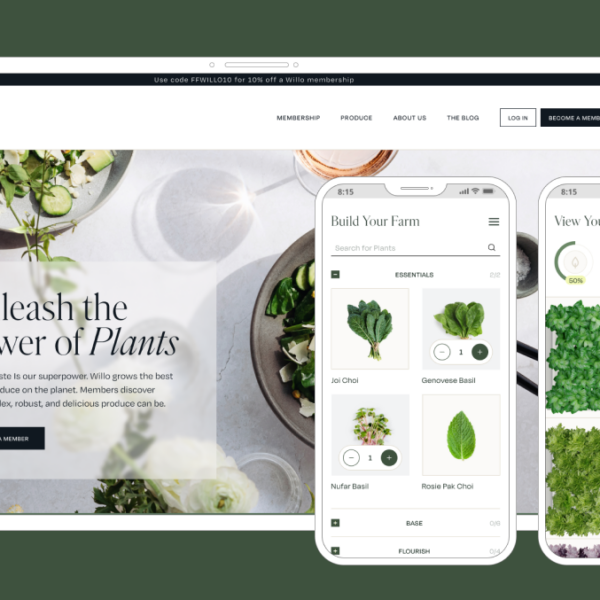
Automated Vertical Farming 2026: The Tech Stack Behind Scalable Agriculture
Read full Story
MVP Development for Startups: The 2026 Comprehensive Strategy for Rapid Validation
TL;DR
- **The MVP redefined**: In 2026, an MVP isn’t just a “minimum” product; it’s a “Minimum Viable Learning” vehicle powered by AI search and real-time user discovery.
- **Speed is the Moat**: Reducing time-to-market via Agile methodologies and automated product discovery is the only way to protect runway in a high-interest economy.
- **AI-Augmentation**: Leveraging Gemini and agentic workflows to build, test, and iterate on features 5x faster than traditional manual development.
In the early stage of a venture, the most expensive commodity is not capital—it is time. MVP Development for Startups has evolved from a simple product release into a complex, data-driven orchestration of user psychology, architectural efficiency, and strategic execution. By 2026, the traditional “build-measure-learn” loop has been compressed, and those who fail to adapt to this high-velocity environment often face the common pitfalls that lead to startup failure.
An MVP (Minimum Viable Product) is the smallest version of your product that allows you to collect maximum validated learning about your customers with the least effort. In the current landscape, this means navigating a world of agentic commerce and AI-native consumers who expect immediate value and low-friction experiences.
The 2026 Definition of “Minimum” and “Viable”
To succeed in 2026, founders must strictly redefine these two pillars: 1. Minimum: Does this feature actively test a core assumption about my user’s pain point? If not, it belongs in the future roadmap, not the MVP. The goal is to avoid feature creep, which is the silent killer of early-stage startups. 2. Viable: Does the product provide enough value that early adopters are willing to change their current behavior (or pay) to use it? Viability is no longer just “it works”; it’s “it’s better than the current alternative.”
The Shift Toward “Agent-Ready” MVPs
In 2026, your MVP doesn’t just need to serve humans; it must be “discoverable” by AI agents. This requires architecting for machine readability from Day 1. Whether you are building on Shopify or a custom stack, your data must be structured to feed into the global Shopping Graph and LLM inference engines.
Strategic Framework: The 4 Pillars of MVP Excellence
At Presta, we help startups launch and scale by focusing on four fundamental pillars of MVP development.
1. The Discovery Pillar: Identifying the “Strategic Why”
Before a single line of code is written, you must undergo intensive product discovery. In 2026, this isn’t just about interviews; it’s about “Answer Engine Optimization” (AEO)—understanding what questions users are asking their AI assistants and where the knowledge gaps exist.
- **Objective**: Validate the problem, not just the solution.
- **Mechanism**: Use AI-augmented research tools to analyze latent search intent and identify underserved niches.
- **Outcome**: A documented value proposition that addresses a specific, high-frequency pain point.
2. The Agile Development Pillar: Sprint to Market
Speed is the only defense against competitive “copycatting.” Implementing a comprehensive Agile framework allows startup teams to stay nimble. By breaking the MVP into 2-week sprints, founders can pivot based on real data rather than sinking 6 months into a “black box” development cycle.
- **KPI**: Time-to-Interaction (TTI). How fast can a user experience your core value prop?
- **Expert Move**: Partnering with a digital product agency that specializes in “MVP Sprints” to bypass recruitment delays.
3. The AI-Augmented MVP: Building at the Speed of Inference
In 2026, the concept of “manual development” for an MVP is becoming an anomaly. The rise of agentic coding and inference-based architecture means that startups can now build and iterate at a speed that was previously impossible. This isn’t just about using Copilot; it’s about integrating Agentic Workflows into the very fabric of your product development lifecycle.
3.1. Generative Prototyping and Sidekick Integration
For founders building on Shopify, the Shopify Magic and Sidekick suite has revolutionized the “Minimum” aspect of the MVP. Instead of spending weeks on catalog setup, SEO descriptions, and UI tweaks, AI agents can generate a fully functional store shell in hours. This allows the human team to focus on the high-level strategy and brand identity.
- **A/B Test Intent**: Launch three different landing page variations for three different “pain point” hypotheses simultaneously.
- **Micro-Copy Optimization**: Let agents continuously refine product descriptions based on real-time search intent signals from the Shopping Graph.
- **Automated QA**: Deploy autonomous agents to “stress test” your checkout flow and inventory logic before the first real customer arrives.
3.2. From “LLM Wrapper” to Proprietary Intelligence
A common mistake in the AI startup era is building what we call an “LLM Wrapper”—a thin UI over a public API with no defensive moat. In 2026, your MVP must demonstrate Proprietary Data Moats.
Even at the MVP stage, you should be collecting unique, first-party data that improves your model’s performance in a way that public models cannot replicate. This “Inference Advantage” is what attracts Venture Studio Capital and secures your long-term viability.
3.3. The “AI-Native” User Experience
- **Proactive Personalization**: The product anticipates user needs based on their behavior and context, offering solutions before they are explicitly requested.
- **Conversational Interfaces**: Beyond chatbots, the entire UI can be navigated and controlled through natural language, reducing friction and learning curves.
- **Adaptive Workflows**: The product learns from user interactions and adapts its functionality and recommendations over time, making it indispensable.
3.4. Ethical AI and Trust by Design
- **Transparency**: Clearly communicating when AI is being used and how it impacts the user’s experience.
- **Fairness**: Ensuring that AI models are not perpetuating biases and are fair to all user segments.
- **Data Privacy**: Implementing robust data governance and privacy controls, especially when dealing with sensitive user data.
- **Human Oversight**: Maintaining clear pathways for human intervention and correction when AI systems make errors or produce undesirable outcomes.
4. Niche Dominance: The 2026 Discovery Framework
The “Mass Market” is dead. In the age of hyper-personalization, the most successful MVPs are those that achieve Niche Dominance. 2026 discovery is about finding the “Smallest Viable Audience” and solving their problem so perfectly that you become their default solution.
4.1. The “Smallest Viable Audience” Strategy
Instead of trying to be the “Uber for X,” try to be the “Specific Solution for Y.” By narrowing your focus, you reduce the complexity of your MVP. For example, if you’re building a travel startup, don’t build a full booking engine. Build a “Sustainable Winter Gear Rental Agent for Iceland Travelers.”
- **Reduce Development Costs**: You only need to build for one specific use case.
- **Increase Conversion Velocity**: Your marketing and UI can be hyper-tailored to that one user’s psychology.
- **Gather High-Fidelity Data**: Feedback from 100 passionate niche users is more valuable than feedback from 1,000 lukewarm general users.
- **Build a Community**: Niche audiences are more likely to form strong communities around a product that perfectly meets their needs, leading to organic growth and advocacy.
- **Achieve Product-Market Fit Faster**: With a smaller, well-defined audience, it’s easier to iterate and find the precise combination of features and messaging that resonates.
4.2. Answer Engine Optimization (AEO) as Discovery
In 2026, product discovery happens within the “Inference Layer” of search engines. Users are asking Gemini, “What is the best way to manage X for a small business?” If your MVP content doesn’t provide a Single Source of Truth for that specific query, your product won’t be found.
Your discovery phase must include a mapping of these “Inference Gaps.” Where are existing tools failing to answer the user’s deep questions? Your MVP should be the answer to those gaps. This is the cornerstone of modern startup GTM frameworks.
4.3. Micro-Influencer and Community-Led Growth
- **Micro-Influencers**: Partner with individuals who have deep credibility within your specific niche, even if their follower count is small. Their recommendations carry significant weight.
- **Community Building**: Create spaces (online forums, Discord channels, local meetups) where your target audience can connect, share problems, and discover your solution organically.
- **Content that Educates and Solves**: Produce highly specific content (blog posts, guides, videos) that directly addresses the unique challenges and questions of your niche, positioning your MVP as the expert solution.
4.4. The “Long Tail” of Problem Solving
- **Higher Willingness to Pay**: Users with acute, underserved problems are often willing to pay a premium for a solution that truly works.
- **Reduced Competition**: Fewer players are typically addressing these highly specific needs, giving your MVP a clearer path to market leadership.
- **Stronger Customer Loyalty**: When you solve a critical, niche problem, customers become incredibly loyal and less likely to switch to a generic alternative.
5. The Scalability Pillar: Build for the Future, Deploy for Today
One of the most costly mistakes startups make is building an MVP on a “toy” architecture that collapses at the first sign of scale. Alternatively, over-engineering for 10 million users on Day 1 drains the runway.
The 2026 solution is Headless Commerce and Modular Architectures. By decoupling the frontend and backend, startups can build a lightweight MVP that can easily integrate with enterprise-grade platforms like Shopify as they grow.
6. The Validation Pillar: The Metrics That Matter
- **Retention**: Are people coming back?
- **NPS**: Would they be “very disappointed” if the product vanished?
- **Unit Economics**: Can you acquire users profitably? (Refer to our Startup Funding 2026 Guide for more on unit economics).
5. The Scalability Pillar: Build for the Future, Deploy for Today
One of the most costly mistakes startups make is building an MVP on a “toy” architecture that collapses at the first sign of scale. Alternatively, over-engineering for 10 million users on Day 1 drains the runway.
The 2026 solution is Headless Commerce and Modular Architectures. By decoupling the frontend and backend, startups can build a lightweight MVP that can easily integrate with enterprise-grade platforms like Shopify as they grow.
5.1. The “Agile Architecture” Framework
- **The Core (Static)**: Your relational database and identity management. These should be built on reliable, standardized protocols to prevent mid-scale migration headaches.
- **The Logic (Modular)**: Your business rules, pricing logic, and agent gateways. Use Model Context Protocol (MCP) to expose these to external AI agents securely.
- **The Interface (Ephemeral)**: Your frontend and conversational nodes. These should be headless and highly portable, allowing you to launch new “storefronts” (web, app, voice, Gemini) without re-engineering the backend.
Retailers often find that migrating from WooCommerce to Shopify is the most logical path for this transition, as Shopify’s Oxygen and Hydrogen platforms provide the perfect environment for headless scalability.
The Economics of the MVP: A Comparative TCO Analysis
Startup founders often focus on the “Build Cost,” but the real threat to the runway is the Maintenance and Opportunity Cost. To provide a clear picture for 2026 budgeting, we have analyzed the three most common MVP architecture models based on a 12-month projections cycle.
1. The Monolithic “Budget” Build (Low Upfront, High Debt)
- **Primary Platform**: Traditional WooCommerce or basic SaaS templates.
- **Upfront Cost**: $5,000 – $15,000.
- **Monthly Maintenance**: $500 (servers) + $2,000 (developer time for security patches/plugins).
- **The Scaling Wall**: Typically hit at 5,000 users or a $1M ARR run rate.
- **Strategic Risk**: High. Fixing WooCommerce performance bottlenecks usually costs more than the initial build.
2. The Shopify-Native Powerhouse (Medium Upfront, Optimized Scale)
- **Primary Platform**: Shopify Advanced with custom theme development.
- **Upfront Cost**: $25,000 – $60,000.
- **Monthly Maintenance**: $399 (platform) + $500 (app fees/minor tweaks).
- **The Scaling Wall**: Virtually non-existent; Shopify handles up to 40,000 orders per minute natively.
- **Strategic Impact**: Excellent. Brands focusing on Shopify benefits see 36% lower TCO over 3 years compared to self-hosted alternatives.
3. The Headless “Growth-Ready” Architecture (High Upfront, Maximum Flexibility)
- **Primary Platform**: Shopify Backend (Headless) with React/Next.js and Oxygen.
- **Upfront Cost**: $80,000 – $150,000+.
- **Monthly Maintenance**: $2,000+ (complex DevOps and specialized engineering).
- **The Scaling Wall**: Completely elastic. Designed for rapid global expansion and omni-channel dominance.
- **Best For**: Funded startups with high-volume projections or complex product customization needs.
The “Hidden Cost” of Cheap E-commerce
Founders should be wary of the allure of ultra-low-cost development. As we discuss in our analysis of the cost of cheap e-commerce, a $5,000 saving during the MVP phase can lead to a $100,000 loss in revenue during your first peak season due to downtime or latency.
Implementation Deep-Dive: From Idea to Interaction in 30 Days
The goal of a modern MVP workflow is to hit the market in 4 to 6 weeks. This aggressive timeline requires a Startup Studio mentality where resources are shared, and processes are unified.
Step 1: The Triage (Days 1-7)
Define the Minimum Success Criteria (MSC). What is the one thing this product *must* do? Strip away the “nice-to-haves” to protect your performance budget.
Step 2: Architecture & Integration (Days 8-14)
Choose a stack that balances speed and longevity. For many, this means a Shopify-native approach for commerce-heavy MVPs or a modern React/Next.js stack for SaaS.
Step 3: Rapid Prototyping (Days 15-21)
Build a functional prototype that simulates the user journey. Use design systems to ensure that even at the MVP stage, the product feels premium and trustworthy.
Step 4: The Soft Launch (Days 22-30)
Deploy to a closed beta cohort. Use real-time feedback loops to catch bugs and identify the “Magic Moment”—the exact interaction that makes a user fall in love with your product.
The Biology of Scaling: Transitioning from MVP to Product Team
A successful MVP is a double-edged sword: it brings users, but it also brings the immense pressure of scale. Many startups fail in the “Post-MVP” phase because they lack the organizational infrastructure to manage growth. At Presta, we refer to this as the Biology of Scaling—the transition from a small “Special Ops” team to a structured, outcome-driven product organization.
1. Decoupling Execution from the Founder
In the MVP stage, the founder is often the primary product manager, QA lead, and vision holder. To scale, you must move from vendor to partner mindset, empowering your team to deliver outcomes rather than just executing tasks.
- **Outcome-Based Roadmaps**: Stop defining success by “features shipped” and start defining it by “user friction reduced” or “retention lift achieved.”
- **Institutionalizing Feedback**: Create automated systems for capturing customer discovery insights from Day 1. Use UserSnap or similar tools to ensure that user feedback is directly linked to your development backlog.
- **Hiring for Cultural Alignment**: As you scale, your first 10 hires will define your engineering culture. Avoid the trap of “hustle culture” and focus on human leadership.
2. Managing Technical Debt After the “Sprint”
MVPs are often built with “Fast Debt”—shortcuts taken to hit a market window. This is acceptable, provided there is a 30-day triage plan to address the most critical regressions. If you allow technical debt to accumulate for more than 6 months, you risk code rot that can stop your growth in its tracks.
AEO for MVPs: The New Search Reality in 2026
Traditional SEO is no longer the primary driver for startup discovery. In 2026, Answer Engine Optimization (AEO) is where the battle for attention is won. When a user asks an AI agent, “What is the best way to develop an app for a retail startup?” the agent synthesizes an answer from a few trusted sources.
1. The “Single Source of Truth” Strategy
To be the answer, your MVP must provide authoritative content that solves a specific user query with precision. This is why we emphasize building an AI-native marketing strategy from the start.
- **Structured**: Using JSON-LD to define the entities and relationships of your product.
- **Synthesizable**: Written in a way that AI models can easily summarize and reference.
- **Experiential**: Showcasing real-world results through case studies and data-backed claims.
2. Building a “Knowledge Graph” for Your Product
- **Defined Problems**: Highlighting the acute pain points your product solves.
- **Usage Contexts**: Where and when your product is the “best fit.”
- **Compatibility Layers**: How your product integrates into a user’s existing “Tech Stack.”
By poisoning your product as a node in the global Shopping and Knowledge Graphs, you ensure that AI assistants recommend you over generic competitors. This is the peak of startup product development in 2026.
MVP Readiness Checklist: 25 Factors for Success
Before you commit to development, run through this comprehensive readiness audit.
Phase 1: Problem-Solution Fit
- Have you interviewed at least 30 potential users about their *current* pain points?
- Can you define your Value Proposition in under 15 words?
- Is there a measurable “Inconvenience Gap” between the current solution and your MVP?
- Have you identified your “Smallest Viable Audience”?
- Does your GTM framework target a high-intent niche?
Phase 2: Technical Architecture
- Is your stack Headless-ready?
- Have you defined a performance budget (max load time < 2s)?
- Is your catalog data structured for the Shopping Graph?
- Have you mapped out your “Agent Gateways” (MCP compatibility)?
- Do you have a plan for zero-downtime scaling?
Phase 3: Financial & Resource Triage
- Do you have at least 6 months of runway based on your TCO projections?
- Have you audited your hidden startup costs?
- Is your development team Agile-certified?
- Do you have a strategic product partner on standby for technical pivots?
Phase 4: Go-to-Market & Metrics
- Do you have a Customer Acquisition Cost (CAC) reduction strategy?
- Is your AI Marketing Strategy operational?
- Have you defined your “Magic Moment” event in your analytics setup?
- Are you treating your FAQ as a primary AEO landing page?
Do not be afraid to migrate platforms or overhaul your UX if the data suggests a pivot. The most successful founders are those who view their MVP not as a final destination, but as the first step in a long-term growth story.
MVP Development for Startups: Frequently Asked Questions (2026 Edition)
1. What is the average cost of MVP development for startups in 2026?
As of 2026, a high-quality, scalable MVP typically costs between $25,000 and $75,000. While it is possible to build “monolithic” versions for less ($5k-$15k), these often incur massive technical debt. A Shopify-native MVP offers the best balance of speed and long-term TCO.
2. How long does the MVP development process take?
Our proven framework targets 4 to 8 weeks from initial discovery to soft launch. This velocity is achieved through Agile methodologies and AI-augmented coding workflows.
3. Should I build my MVP on Shopify or a custom stack?
If you are building a commerce-centric product, Shopify is the future. It provides 90% of the required infrastructure (payments, inventory, security) natively. If your product requires highly unique, non-commerce logic, a headless custom stack is the better path.
4. How do I prevent feature creep during the build?
Strictly adhere to your Minimum Success Criteria (MSC). Every feature request must answer: “Does this validate our core hypothesis?” If the answer is “no,” it belongs in the post-validation roadmap. Learn more about diagnosing feature creep.
5. What is the difference between a prototype and an MVP?
A prototype is a non-functional or semi-functional simulation used for stakeholder buy-in. An MVP is a functional, live product that real users interact with to provide validated learning. You can learn more in our complete MVP roadmap guide.
6. Do I need to worry about AI agents in my 2026 MVP?
Yes. If your product data isn’t structured for agentic commerce, you will be invisible to the “answer engines” that now dominate 25% of all search traffic.
7. How should I handle technical debt in the early stages?
Treat technical debt like a financial loan. It’s useful for “buying time,” but it must be repaid. Plan for a 30-day “triage” sprint immediately following your MVP launch to address critical shortcuts.
8. What are the best metrics for validating an MVP?
Focus on Retention (Day 30), Net Promoter Score (NPS), and Customer Acquisition Cost (CAC). Vanity metrics like “hits” or “signups” are less relevant than engagement. Refer to our 2026 CAC reduction guide for deeper insights.
9. Can I outsource my MVP development successfully?
Yes, provided you hire a Strategic Partner, not a vendor. A partner delivers outcomes and challenges your assumptions; a vendor just executes tickets. Read more on evaluating a migration or development agency.
10. How does “Answer Engine Optimization” (AEO) affect my launch?
AEO ensures that when users ask AI tools about your niche, your product is recommended. It requires structured data and high-authority content from Day 1.
11. Is Agile still relevant for MVPs in 2026?
Agile is more relevant than ever. The high-velocity environment of 2026 requires continuous iteration. Startups that don’t implement Agile often find themselves building products that are obsolete by the time they launch.
12. What is “Product-Market Fit” and how do I find it?
Product-Market Fit is the point where your product is pulled by the market rather than pushed by marketing. It requires the 7 Fits framework and extreme dedication to user feedback.
13. How do I protect my startup’s runway during development?
Implement Zero-Based Budgeting and strictly monitor your burn rate. Avoid over-hiring until you have validated your core business model.
14. What are the most common startup mistakes in 2026?
Building for “everyone,” ignoring AEO, and failing to build a proprietary data moat.
15. How can Presta help with my MVP?
We act as a Startup Studio partner, providing the technical expertise, strategic guidance, and execution speed needed to transform your idea into a market winner.
Conclusion: The Strategic Future of Startup Excellence
The decade of “move fast and break things” has been replaced by the era of “move fast and build smart.” In 2026, MVP Development for Startups is a disciplined science that balances the raw speed of AI-augmented coding with the deep, human-centric psychology of product discovery.
Success no longer belongs to those who raise the most capital, but to those who validate their hypotheses the fastest while maintaining the lowest Total Cost of Ownership. By focusing on niche dominance, agentic readiness, and ethical AI integration, you aren’t just building a product—you are building a resilient, scalable organization.
Your MVP is the foundation of your legacy. Don’t build it in a vacuum. Partner with experts who have spent a decade refining the art of digital product creation.
Ready to dominate your niche in 2026? Contact Presta today and let’s start your journey from MVP to market leader.
