25 November 2025
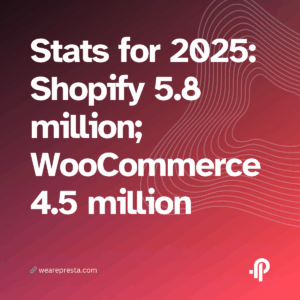
WooCommerce vs Shopify: 2025 Comparison
Read full Story
Complete guide to Shopify agency services for busy business owners – outsource with confidence
TL;DR
- Busy founders lack time and in-house capacity to build and grow Shopify stores effectively.
- The guide shows how to vet and engage agencies with workshops, fast prototypes, and clear scope documents.
- The right agency speeds launch, raises conversion, lowers acquisition costs, and recoups its fees.
Founders and product leaders increasingly consider a shopify agency as a strategic partner rather than a vendor; this shift reflects the reality that experienced agencies combine design, engineering and growth marketing to accelerate traction and reduce time-to-market. The first interaction often establishes whether an agency can deliver measurable outcomes quickly and efficiently, and seasoned teams use discovery workshops, rapid prototyping and data-driven roadmaps to demonstrate value. Startups and scale-ups with limited in-house capacity benefit when a partner provides a single accountable team responsible for design, build and launch. Evidence from high-performing engagements shows that the right external partner typically pays for itself by improving conversion, lowering acquisition costs and shortening development cycles.
What this guide offers is a practical, decision-focused view of agency services: clear service definitions, transparent engagement models, technical capabilities to request in RFPs, and a checklist to qualify agencies for early-stage and scaling businesses. Practitioners will find example pricing bands, sample deliverables and mitigation strategies for common objections such as budget constraints and market knowledge gaps. The perspective throughout is pragmatic and evidence-based, using startup-friendly standards and case-proven approaches that founders and heads of product can apply directly to procurement and planning.
What a Shopify agency does and why it matters
A Shopify agency typically provides a blend of product strategy, UI/UX design, front-end and back-end development, and growth marketing focused on Shopify and Shopify Plus platforms. They take responsibility for shaping customer journeys, building conversion-optimized storefronts and integrating the commerce stack so that payments, inventory and analytics work reliably at scale. For founders with lean teams, a single partner removes coordination overhead and accelerates decisions by centralizing technical and design accountability.
Beyond execution, many agencies act as interim product teams: they run discovery sessions, validate hypotheses with rapid prototypes, and instrument analytics so that subsequent iterations are data-driven. This orientation reduces wasted spend by ensuring initial builds target validated product-market fit and high-impact funnel improvements. Agencies that combine these disciplines tend to be more effective than specialists working in isolation because they align design and engineering around measurable business outcomes.
Core reasons businesses engage an agency include speed, expertise and the ability to scale on demand. For a growth-oriented startup, the most attractive outcome is not the deliverable itself but the acceleration of key metrics—repeat purchase rate, average order value and CAC payback. Agencies that can demonstrate short-term wins while setting up long-term capability transfer represent the highest ROI for constrained teams and budgets.
A pragmatic way to evaluate the potential impact is to request prior engagement metrics and proof points. Agencies with a decade of experience and projects that show clear lifts in conversion and revenue create confidence that fees are an investment, not a cost center. Many top-tier partners publish case studies that highlight percentage lifts, time-to-market improvements and technical architectures, which provide a useful baseline for expectations.
Core services and deliverables to expect from a Shopify agency
A professional agency will package services into clearly defined deliverables so stakeholders can track progress and outcomes. Common service categories include discovery and research, UX/UI design, front-end development, custom app or API work, integrations (ERP, CRM, headless CMS), performance optimization and growth marketing. Each category can map to a set of milestones and acceptance criteria, providing operational clarity throughout the engagement.
- Discovery and alignment: user interviews, stakeholder workshops, opportunity mapping, technical audit.
- Design and prototyping: information architecture, clickable prototypes, visual design system and component library.
- Development and integrations: theme development or headless implementation, custom apps, payment and shipping integrations.
- Growth and optimization: analytics setup, A/B testing, email and acquisition strategy, post-launch iteration.
These deliverables should be accompanied by a transparent roadmap and a definition of done for each milestone. Agencies that include handover documentation, basic training for internal teams and an optional support plan minimize risk of knowledge loss after launch. A practical request during procurement is to require a sample sprint plan and the roles that will be allocated to each phase.
Agencies that combine design, engineering and growth can compress timelines by working in parallel rather than sequentially. For example, while back-end engineers finalize integrations, designers can iterate on screens informed by early analytics, and growth strategists can preconfigure acquisition tracking. This parallel workflow reduces handoff delays and increases the probability that the first launch meets business goals.
Transparency in deliverables and reporting is crucial: weekly sprint reports, a staging environment to review progress and a shared backlog with prioritization criteria are standard. Teams should insist on clear acceptance tests and fallback plans for out-of-scope requests to avoid scope creep. Agencies that provide a fixed list of deliverables tied to measurable KPIs reduce ambiguity and make evaluation straightforward.
Engagement models, pricing bands and example project scopes
Understanding engagement models helps businesses match budget and risk appetite with the right commitment level. Common models include fixed-price projects for narrow scopes, time-and-materials retainers for longer-term partnerships, and performance or revenue-share agreements for outcome-focused engagements. Each model has trade-offs: fixed-price offers predictability but limited flexibility; retainers provide ongoing capacity; revenue-share aligns incentives but requires rigorous measurement and contract clarity.
Typical pricing bands vary by region, agency seniority and service complexity. Example ranges (illustrative, not prescriptive) help procurement teams qualify partners quickly:
- Small redesign or theme refresh (fixed scope): $8k–$25k. Deliverables typically cover theme customization, minor integrations and a conversion-focused UI refresh.
- Full custom storefront build (Shopify or Shopify Plus): $25k–$120k. Includes discovery, design system, custom theme or headless front-end, primary integrations and QA.
- Complex integrations and custom apps: $15k–$80k. Back-end work involving ERPs, subscription engines or bespoke fulfillment logic.
- Ongoing growth and engineering retainer: $4k–$20k per month. Continuous optimization, feature development and campaign support.
- High-touch enterprise engagements (Shopify Plus): $100k+ initial build and $15k+ monthly for sustained growth and engineering.
These bands should be adjusted for market, complexity and desired time-to-market. Agencies typically provide phased approaches that start with a high-impact pilot or MVP to validate assumptions and produce measurable outcomes before committing to larger scope.
A recommended procurement tactic is to request a phased quote: Phase 1 (discovery and MVP) listed as a fixed price, Phase 2 (scale and integrations) estimated as T&M with caps, and optional Phase 3 (growth retainer) priced monthly. This hybrid approach balances predictability and flexibility and aligns with the need to prioritize highest-impact work within budget.
When comparing proposals, buyers should normalize hourly rates and role composition, request example sprint plans and ask for references that match industry or technical needs. Agencies that publish clear pricing bands and sample scopes reduce selection friction and help founders make quicker decisions.
How a Shopify agency drives ROI and faster time-to-market
A metrics-first agency approach treats the engagement as a measurable investment with expected returns. They frame success around conversion lifts, reduced acquisition costs, increased average order value and improved lifetime value. By focusing on the highest-leverage activities first, agencies reduce wasted spend and accelerate proof of concept.
- Faster iteration cycles: short sprints and continuous delivery reduce the time between idea and validated result.
- Conversion optimization: data-driven design and A/B testing systematically lift key funnel metrics.
- Reduced internal overhead: a single accountable partner cuts coordination time between design, development and marketing.
- Better technical reliability: experienced agencies reduce downtime, errors and maintenance costs through hardened CI/CD and testing practices.
A typical high-impact engagement begins with discovery and a prioritized roadmap, moves into rapid prototyping and a lean build, and then deploys measurement that supports iterative optimization. Agencies with integrated design and engineering teams can often deliver an MVP within weeks rather than months, which materially shortens the path to revenue.
Proof points matter: agencies with a long track record, such as teams founded before 2015 and with multiple end-to-end projects, frequently demonstrate the ability to deliver measurable improvements quickly. For example, partners that present case studies showing conversion uplifts of 15–40% and shortened launch timelines make the case that agency fees are investments that compound.
For businesses evaluating partners, ask for the agency’s hypothesis-driven examples: what experiments did they run, which KPIs moved and what subsequent revenue uplift followed. Agencies that tie work directly to outcomes reduce ambiguity and make it straightforward for stakeholders to evaluate ROI.
Presta’s background in building product-led digital experiences spaces these capabilities together as a repeatable process: discovery, rapid build, measurement and iteration. Organizations evaluating partners can learn more about shopify agency approaches and sample sprints on an internal blog that outlines standard deliverables and outcomes.
Mid-article action: take a low-risk step toward growth
For teams ready to validate product assumptions quickly, a short pilot is often the most efficient next move; they can grow your shop – hire shopify agency with Presta as a partner to run a scoped sprint that demonstrates measurable uplift and clarifies long-term scope.
Selecting the right shopify agency: decision checklist for founders
Selecting an agency requires a checklist that balances technical competence, design maturity and cultural fit. The checklist below helps clarify whether a partner can meet both immediate tactical needs and long-term strategic goals.
- Domain experience: examples of relevant vertical work and demonstrable lifts in metrics.
- Team composition: named roles (product manager, designer, lead engineer) and their allocation across sprints.
- Delivery process: sprint cadence, staging environment access, acceptance criteria and reporting.
- Pricing transparency: clear bands, phased pricing options and statements on change-order handling.
- Technical depth: examples of complex integrations, headless implementations or custom apps.
- Post-launch support: SLAs, retainer options and knowledge-transfer commitments.
Each item on the checklist should be validated with a written example or reference. For example, if an agency claims expertise in headless commerce, request a short technical summary of the architecture used in a prior project and the metrics achieved. If they promise growth marketing, ask for experiment logs, tools used and attribution approaches.
Procurement teams should also request an RFP template or sample brief from shortlisted agencies. The availability of templated RFPs signals process maturity and accelerates the selection timeline. Buyers can further qualify partners by asking for a short scoped pilot proposal that includes objectives, success metrics and a fixed price for phase one.
Agencies that provide transparent discovery outcomes and a prioritized roadmap reduce the chance of wasted spend. Teams that lack internal capacity often prefer partners who also offer optional training and documentation to ensure internal engineers can take over routine maintenance after launch. For more guidance on selecting partners and comparing proposals, teams can discover how our platform can help evaluate agencies using consistent scoring criteria.
Technical capabilities and advanced implementations to evaluate
Technical capability is a differentiator for complex commerce problems. Advanced implementations—such as headless architectures, custom app development, and deep integrations with ERPs or PIM systems—require both engineering discipline and domain experience. Evaluators should prioritize evidence of production-grade implementations, documented CI/CD practices and post-deployment monitoring.
Three technical categories merit deeper attention:
Headless and composable architectures
Headless approaches decouple the front end from Shopify’s rendering layer, enabling richer experiences and improved performance for complex catalogs or bespoke UX. Agencies with headless expertise should present prior architectures, performance metrics and examples of SSR (server-side rendering) or SSG (static-site generation) used in commerce contexts.
APIs, middleware and integrations
Complex businesses often need middleware that connects Shopify to ERPs, OMS or subscription platforms. An agency should show history of building reliable middleware, handling rate limits and maintaining data consistency in near-real time. Sample integration diagrams and monitoring dashboards are strong signals of competence.
Performance optimization and scalability
Page speed and reliability directly impact conversion. Agencies should demonstrate a history of performance work—bundle splitting, image optimization, server-side caching and edge strategies—along with measurement that shows reduced time-to-interactive and improved Core Web Vitals.
A practical procurement step is to request a short technical evaluation of the current stack and a 30-day performance roadmap. Agencies that can audit and prioritize quick wins—reducing bundle sizes, deferring non-critical scripts, optimizing images—provide immediate measurable impact. For enterprise-scale needs, ask for reference architectures and runbooks that show response plans for traffic spikes and incidents.
When technical depth is required, include a two-stage evaluation: first, a senior architect call to validate proposed approaches; second, a short technical test (for example, a 1-week spike to prove an integration pattern) before signing for a full build. This approach mitigates risk and gives buyers confidence in the agency’s engineering capability.
External resources and industry best practices can help frame technical conversations; the Shopify Partner documentation and authoritative agency guides provide standards for integration and performance work Shopify partner examples. Technical proposals should include monitoring targets and a plan for continuous optimization.
Managing risk: contracts, timelines and post-launch support
Risk management is essential when outsourcing core product work. Contractual clarity—on scope, timeline, deliverables and change orders—reduces disputes and preserves bandwidth for product innovation. Agencies that provide clear milestone payments, acceptance criteria and a defined escalation path are preferable for busy leaders who need predictable outcomes.
- Contract elements to request: scope of work, acceptance tests, intellectual property clauses, termination terms and warranties.
- Delivery commitments: sprint cadence, staging review windows and rollback plans for production releases.
- Support and maintenance: SLA tiers, on-call procedures and retainer options for ongoing iteration.
- Security and compliance: data handling practices, PCI considerations and vendor audit rights.
Beyond legal terms, operational practices prevent surprises. Ask for communication norms (daily standups, weekly demos), a shared backlog tool and a clear bug triage protocol. The presence of automated testing, deployment pipelines and staging environments indicates a mature engineering practice that limits regressions and accelerates fixes.
Onboarding and knowledge transfer are often overlooked. Agencies should include documentation deliverables and a handover period where internal teams shadow operations. This ensures that future changes can be handled by in-house staff without repeatedly incurring high agency costs.
Case studies and references should be targeted: ask for clients with similar scale and complexity to validate the delivery model. Agencies that can supply a client contact willing to discuss timelines and support responsiveness provide stronger signals than marketing claims alone.
Frequently Asked Questions
Will hiring a Shopify agency cost more than hiring freelancers?
Agencies often appear more expensive upfront but provide bundled capabilities—product strategy, design, engineering and growth—under a single accountable roof. This reduces coordination overhead and vendor management costs that typically emerge when multiple freelancers must be coordinated. Agencies also assume responsibility for delivery risk and provide documented processes, which translates into faster time-to-market and fewer rework cycles.
Can an external agency truly understand our niche market?
Top agencies start with focused discovery sessions and stakeholder workshops to absorb market nuances quickly. They pair domain research with rapid customer interviews and prototype testing to validate assumptions. Reputable partners provide examples of previous vertical-specific work and include a knowledge-transfer plan that embeds market context into the product.
How predictable are timelines and deliverables?
Predictability increases with clear scopes, prioritized roadmaps and phased delivery. Fixed-price phase-one pilots with precise acceptance criteria are the most predictable. After initial validation, a retainer or time-and-materials approach with sprint-based commitments offers the agility needed for continuous improvement. Agencies should provide sprint plans and a shared backlog to make timelines transparent.
What are common mistakes when briefing an agency?
Common mistakes include underscoping discovery, failing to define success metrics, and expecting the agency to guess product priorities. Well-structured briefs include business goals, target metrics, current constraints and a prioritized list of features. Requesting an RFP template or sample brief from the agency helps standardize expectations.
How long before measurable benefits appear?
Measurable benefits can appear within the first delivery cycle if the agency focuses on high-impact conversion levers—checkout optimization, product page improvements and checkout flow simplifications. Typical initial wins can materialize in 4–12 weeks for focused pilots; more complex integrations may take longer but set the foundation for sustained growth.
What should be included in a post-launch support plan?
A robust support plan includes defined SLAs for incident response, a monthly allocation for iterative improvements, and a knowledge-transfer schedule. It should also specify monitoring dashboards, error budgets and a process for prioritizing post-launch work against new feature requests.
Realize measurable growth with a Shopify agency partner
Partners that combine product design, engineering and growth bring tangible business outcomes that justify agency investment; engaging a shopify agency is an investment in speed, expertise and predictable delivery rather than an expense. The most effective relationships start with a short, scoped pilot that validates assumptions and creates immediate momentum, followed by a phased roadmap that prioritizes measurable revenue outcomes.
For teams ready to test a partnership with an experienced full-service provider, one practical next step is to grow your shop – hire shopify agency. Presta’s integrated approach to discovery, rapid build and data-driven growth can help founders and product leaders accelerate time-to-market and achieve measurable ROI.
Sources
- Top 6 Ecommerce Agencies: How to Choose an Agency (Shopify Blog) – Overview of agency selection criteria and partner capabilities.
- How to Choose a Shopify Agency (Charle Agency) – Practical checklist and vendor evaluation tips.
- Complete Guide to the Role of a Shopify Agency (Blackbelt Commerce) – Service descriptions and expectations for Shopify-focused partners.
- The Ultimate Guide to Shopify Agency Partners (Ecorn Agency) – Agency partnership models and case-focused guidance.