
24 November 2025
Shopify Agency Serbia
Read full Story
WooCommerce vs Shopify: 2025 Comparison
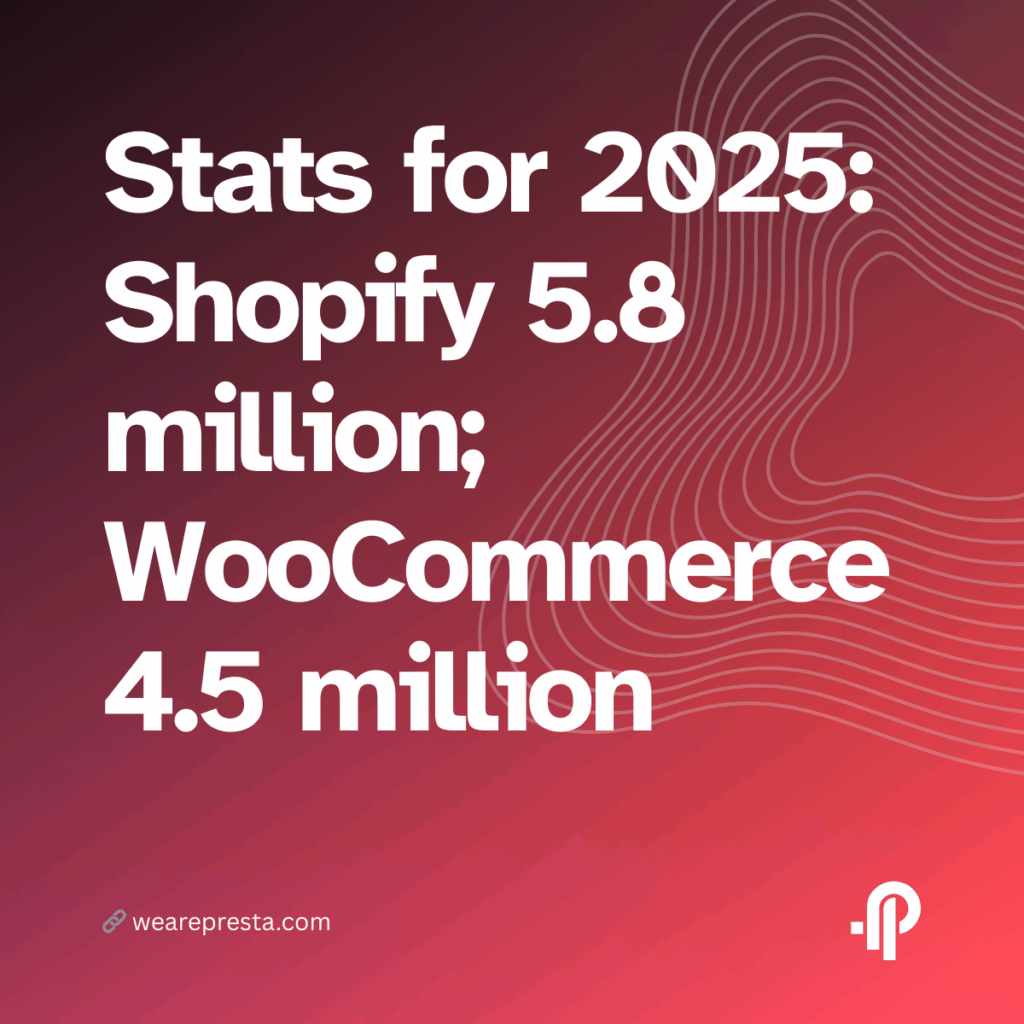
In 2025, Shopify leads with over 5.8 million sites, offering user-friendly features and scalability, ideal for rapid growth. WooCommerce, with 4.5 million sites, excels in customization and SEO flexibility for technically skilled users. Shopify’s subscription model simplifies costs, while WooCommerce’s variable pricing allows for control. Businesses should choose based on their needs: ease of use and speed favor Shopify, while customization and control favor WooCommerce.
Confused about whether to choose WooCommerce or Shopify for your online store in 2025? With 60% of eCommerce businesses struggling to select the right platform, this comparison will help you navigate key differences in features, pricing, and usability. By the end, you’ll understand which platform best aligns with your business goals and how Presta can elevate your eCommerce experience.
WooCommerce vs Shopify: 2025 Comparison Overview
In 2025, the competition between WooCommerce and Shopify intensifies, with each platform catering to different business needs. Shopify powers over 5.8 million live websites, establishing itself as a leading choice for many entrepreneurs. Its user-friendly interface and comprehensive sales features contribute to its reputation as the best overall ecommerce platform. Shopify excels in scalability, making it ideal for businesses planning to grow quickly.
On the other hand, WooCommerce is active on 4.5 million sites, attracting users who prioritize customization and SEO flexibility. This platform is particularly appealing for those who want to tailor their online stores extensively. WooCommerce offers a high degree of personalization, allowing businesses to create unique shopping experiences that align closely with their brand identity.
Both platforms have their strengths, but the choice often boils down to specific business goals. For instance, if ease of use and rapid setup are priorities, Shopify stands out. Conversely, businesses that require intricate design options and SEO capabilities may prefer WooCommerce. Each platform’s features reflect a distinct approach to ecommerce, catering to various user needs and preferences, ultimately shaping the future of online retail (WebsiteBuilderExpert, 2025).
What Are WooCommerce and Shopify?
WooCommerce is a free, open-source plugin for WordPress that enables users to transform any WordPress site into a fully functional online store. It requires self-hosting and technical setup, appealing to those who desire extensive customization. In contrast, Shopify is a fully hosted, all-in-one ecommerce platform, providing everything needed to launch and manage an online store effortlessly.
Why This Comparison Matters in 2025
Selecting the right ecommerce platform is crucial as the global ecommerce market is projected to reach $6.9 trillion in 2025. Businesses must consider scalability, ease of use, and customization capabilities to thrive. Shopify’s strength lies in its seamless user experience and robust features, making it ideal for rapid growth. Conversely, WooCommerce offers unmatched flexibility for those seeking to create personalized shopping experiences. Understanding these differences helps businesses align their platform choice with their long-term goals, ensuring they can effectively meet evolving market demands.
Key Differences Between WooCommerce and Shopify
When comparing WooCommerce and Shopify, several key differences emerge that can significantly impact your ecommerce strategy.
First, the platform types differ. WooCommerce is a self-hosted WordPress plugin, giving users full control over their website. This allows for extensive customization at the code level, which is ideal for those with technical skills. In contrast, Shopify operates as a hosted SaaS solution, emphasizing ease of use with a beginner-friendly interface.
Pricing models also vary. WooCommerce is free to start, but users must pay for hosting and add-ons, which can add up. Shopify, on the other hand, follows a subscription-based model that covers hosting and support, making it simpler to predict costs.
Scalability is another crucial factor. WooCommerce’s growth is limited by hosting capabilities and technical expertise, while Shopify offers built-in, automatic scaling, making it suitable for businesses poised for rapid growth.
Finally, support structures differ. WooCommerce relies on community-driven forums, which can be hit or miss, whereas Shopify provides 24/7 professional support, ensuring assistance is readily available when needed.
| Feature | WooCommerce | Shopify |
|---|---|---|
| Platform Type | Self-hosted WordPress plugin | Hosted SaaS solution |
| Customization | Full code-level control | Theme and app-based customization |
| Ease of Use | Moderate to advanced | Beginner-friendly |
| Pricing Model | Free plugin + hosting + add-ons | Subscription-based |
| Scalability | Limited by hosting and technical skill | Built-in, automatic scaling |
| SEO | Highly customizable | Basic, theme-dependent |
| Support | Community-driven | 24/7 professional support |
| Best For | Custom stores, WordPress users | Quick setup, growing businesses |
Platform Structure: Hosted vs Open Source
Shopify operates as a hosted SaaS platform, managing all infrastructure, security, and updates for users. This means entrepreneurs benefit from a hassle-free experience, paying a monthly fee for a turnkey solution. In contrast, WooCommerce is open-source and self-hosted, requiring users to handle their own hosting and security. This offers more control but demands technical expertise for effective management (Shopify Help Center).
Customization and Flexibility
WooCommerce offers extensive customization options, allowing complete modification of HTML, CSS, and PHP. This flexibility enables businesses to create unique checkout processes and product types tailored to their needs. In contrast, Shopify limits customization primarily to theme editing and Liquid templating, restricting the ability to implement distinctive business models.
Ease of Use and Setup
Shopify stands out for its ease of use, rated 5/5 thanks to a guided setup process and intuitive interface. This makes it especially appealing for those new to ecommerce. Users can launch their stores quickly without extensive technical knowledge. In contrast, WooCommerce is rated 3/5, as it requires a more technical setup and third-party hosting. This can be a barrier for beginners, but it allows for deeper customization, making it suitable for users with specific technical skills and unique branding needs.
Feature Comparison: Sales, Design, and Integrations
When comparing sales features, WooCommerce offers basic options that often rely on plugins for added functionality. This can lead to a more customized experience, but it may require additional setup and maintenance. In contrast, Shopify comes with advanced, built-in sales features, streamlining the selling process right out of the box. This makes it particularly appealing for businesses that want to get up and running quickly without the hassle of extensive configuration.
Design options also differ significantly. WooCommerce provides access to thousands of WordPress themes, allowing for greater flexibility in creating a unique online presence. However, Shopify limits users to hundreds of themes, which are specifically tailored for ecommerce. This can simplify the design process but may restrict deep customization.
Integrations play a crucial role in ecommerce functionality. WooCommerce boasts over 900 extensions and WordPress plugins, offering a variety of tools to enhance store performance. Shopify, on the other hand, has over 8,000 apps available, making it easier to find solutions that fit specific business needs.
For businesses requiring point-of-sale (POS) capabilities, WooCommerce relies on third-party apps, which can complicate the setup. Shopify provides a built-in POS system that includes advanced features, making it more suitable for retailers looking to integrate online and offline sales seamlessly.
| Feature | WooCommerce | Shopify |
|---|---|---|
| Sales Features | Basic, plugin-dependent | Advanced, built-in |
| Design Options | Thousands of WordPress themes | Hundreds of Shopify themes |
| Integrations | 900+ WooCommerce extensions + WordPress plugins | 8,000+ Shopify apps |
| POS | Third-party apps required | Built-in POS, including advanced features in 2025 |
Sales and Inventory Management
Sales and inventory management are crucial for any online store, and both platforms offer distinct capabilities. Shopify excels with advanced inventory management features like automated stock tracking, bundle orders, and split-screen POS results. This makes it easier for businesses to streamline operations and efficiently manage sales. In contrast, WooCommerce provides basic inventory control. However, to access advanced features, users often need to rely on additional plugins. Notably, WooCommerce’s own POS was discontinued in 2025, limiting its integrated sales management options (Shopify Winter ’25 Update).
Design Options and User Experience
WooCommerce offers extensive design options, integrating seamlessly with page builders like Elementor and providing thousands of both free and premium WordPress themes. This flexibility allows users to create highly customized storefronts that reflect their brand identity. In contrast, Shopify features a curated selection of themes along with a user-friendly theme editor, but its customization capabilities are somewhat limited. This makes Shopify ideal for those who prefer simplicity over extensive personalization in design.
Apps, Extensions, and Integrations
WooCommerce offers over 900 extensions and full access to all WordPress plugins, enhancing its customization capabilities. In contrast, Shopify boasts more than 8,000 apps, ensuring better theme compatibility and a stronger ecommerce focus. This extensive range allows businesses to tailor their online presence effectively according to their specific needs.
Pricing and Value for Money in 2025
When evaluating pricing, WooCommerce and Shopify present distinct models suited to different business needs. WooCommerce offers flexibility with costs ranging from $4 to $480 per month, depending on factors like hosting, plugins, and themes. This variability allows businesses to scale their expenses according to their specific requirements, making it attractive for those who want to control their budget closely.
In contrast, Shopify’s pricing is more structured, with core plans priced between $29 and $299 per month. This pricing structure provides clarity, but businesses might incur additional costs for apps and transaction fees, especially at lower tiers. While Shopify’s plans include essential features, scaling up for advanced functionalities can lead to significantly higher expenses.
Ultimately, the choice between these platforms hinges on how businesses prioritize value for money. WooCommerce may be ideal for those seeking customization and lower initial costs, while Shopify offers a straightforward, user-friendly experience that might justify its higher price for some users. Balancing these factors is essential for making an informed decision in 2025.
Core Costs and Subscription Models
Costs differ significantly between WooCommerce and Shopify, impacting budgeting strategies for businesses. WooCommerce is a free plugin, but expenses for hosting, domain, and premium plugins can accumulate. A typical small store might cost around $100 to $200 per year. In contrast, Shopify offers all-inclusive monthly subscriptions, ranging from $39 to $105, with no hidden hosting fees (WooCommerce Pricing).
Hidden Fees and Transaction Charges
Hidden fees can significantly impact overall costs when choosing between WooCommerce and Shopify. Shopify imposes transaction fees for third-party payment gateways, ranging from 0.5% to 2% per transaction, unless using Shopify Payments. In contrast, WooCommerce has no platform transaction fees, though payment gateways might charge their own fees.
SEO, Performance, and Security
When comparing WooCommerce and Shopify, SEO, performance, and security are crucial factors that can significantly impact an online store’s success. WooCommerce excels in SEO customization, providing users with deeper control over their optimization strategies. This flexibility allows businesses to tailor their SEO efforts to their specific needs, enhancing visibility in search engine results. However, the platform’s performance heavily relies on the quality of hosting and the technical optimization implemented by the user.
In contrast, Shopify offers consistent and predictable performance, which is a significant advantage for businesses focused on reliability. Its built-in security features ensure that transactions and customer data are well-protected. However, SEO capabilities on Shopify can be more limited and often depend on the chosen theme. This can restrict how well a store can rank in search engines compared to WooCommerce’s extensive options.
Ultimately, the decision between these two platforms involves weighing the importance of SEO flexibility against the performance and security benefits that Shopify provides. Businesses prioritizing customization and SEO may lean towards WooCommerce, while those seeking a straightforward, secure solution might find Shopify more suitable.
WooCommerce offers deeper SEO customization and control, but performance depends on hosting and technical optimization (Omnisend, 2025).
SEO Tools and Capabilities
WooCommerce offers extensive SEO capabilities, allowing full control over aspects like custom URLs, meta tags, and structured data. This flexibility is crucial for businesses aiming to optimize their online visibility. In contrast, Shopify provides basic SEO tools, but advanced features often necessitate additional apps. The platform’s URL structure and theme selection can significantly influence SEO performance, making it important for users to choose wisely to enhance search rankings.
Performance, Speed, and Reliability
Performance and speed are crucial for e-commerce success. Shopify offers consistent, optimized performance across all stores, benefiting from automatic scaling and minimal downtime. This reliability allows businesses to focus on growth without worrying about technical issues. In contrast, WooCommerce’s performance largely depends on the hosting provider and technical setup. While it can be optimized for speed, it requires ongoing maintenance to ensure optimal functionality. Businesses must weigh these factors when choosing their platform.
Customer Support and Community Resources
Both WooCommerce and Shopify provide valuable customer support and community resources, but they differ significantly in their offerings. Shopify stands out for its extensive support options, which include twenty-four-seven chat, email, and phone support. This round-the-clock assistance is complemented by comprehensive documentation and vibrant community forums where users can share insights and solutions. Such resources can be crucial for business owners who may need immediate help or guidance as they navigate the platform (Shopify Support).
In contrast, WooCommerce relies more on community-driven support. While it does offer community forums and detailed documentation, it lacks official twenty-four-seven support. Users often have to turn to third-party solutions or the community for help, which can lead to delays in resolving issues. This approach may suit some tech-savvy users who prefer a DIY method but could be a drawback for those needing more immediate assistance. Consequently, businesses that prioritize quick and reliable support may find Shopify’s offerings more appealing, while those seeking flexibility and customization might lean towards WooCommerce despite its limitations in support options.
Support Channels and Responsiveness
Both platforms offer distinct support channels to assist users. Shopify is known for its prompt, professional support, ensuring quick issue resolution through 24/7 customer service, live chat, and email options. This responsiveness is a significant advantage for businesses that require immediate assistance. In contrast, WooCommerce relies more on community forums and documentation, which can delay resolutions. While WooCommerce users can find valuable resources online, they may not receive the same level of immediate support as Shopify’s dedicated service team.
Community, Documentation, and Learning Curve
Both platforms offer unique advantages when it comes to community support, documentation, and the learning curve. WooCommerce boasts a large community and extensive documentation, which can be invaluable for troubleshooting and advanced customization. However, beginners may find the learning curve steeper due to its complexity. In contrast, Shopify is designed to be beginner-friendly, featuring comprehensive guides and tutorials that ease the onboarding process. This makes it more accessible for new users, although it may lack the technical depth that advanced users seek.
Use Cases: Which Platform Fits Your Business?
When choosing between platforms, understanding specific use cases can guide your decision.
Use Cases: Which Platform Fits Your Business?
For businesses with technical expertise, custom needs, or existing WordPress sites, WooCommerce stands out as the ideal choice. This platform allows for extensive customization, enabling users to tailor their online stores to match their unique brand identity. If you have a team familiar with coding and website management, WooCommerce can be a powerful tool. It fits well with businesses that prioritize SEO flexibility and want to leverage their existing WordPress infrastructure.
Conversely, Shopify is best for beginners, quick setup, and businesses focused on growth and scalability. Its user-friendly interface makes it accessible for those without technical backgrounds. With features designed for rapid deployment, Shopify allows entrepreneurs to start selling almost immediately. This platform is particularly beneficial for businesses aiming to scale quickly, as it supports a wide range of integrations and apps that enhance functionality.
Selecting the right platform ultimately hinges on your business goals and resources. If you value customization and control, WooCommerce may be your best bet. However, if you seek an effortless setup and the potential for quick growth, Shopify could be the perfect fit. Understanding these use cases helps clarify which platform aligns with your vision and operational capabilities.
Small Businesses and Startups
Small businesses and startups often choose Shopify for its user-friendly interface and predictable pricing structure. This platform simplifies the ecommerce experience, allowing entrepreneurs to focus on growth rather than technical hurdles. Its built-in features, such as integrated payment processing and customizable templates, make it accessible for those with limited technical expertise. As a result, Shopify is the preferred choice for small businesses and startups due to its ease of use, predictable costs, and built-in features (WebsiteBuilderExpert, 2025).
Scaling and Enterprise Needs
For businesses anticipating rapid growth, scalability is crucial. Shopify scales seamlessly with business growth, offering advanced plans and features for large enterprises. This flexibility allows companies to expand their operations without worrying about platform limitations. WooCommerce, while customizable, may require more technical management to achieve similar scalability.
Shopify Advantages Over WooCommerce: 2025 Insights
Shopify stands out with its faster setup and superior sales features, making it a compelling choice for many businesses. Entrepreneurs can launch their online stores in mere hours, thanks to its intuitive interface and streamlined processes. This efficiency is crucial for those eager to start selling quickly without getting bogged down by technical details.
Additionally, Shopify provides more predictable performance, which is vital for businesses that rely on consistent uptime and speed. This reliability translates into better customer experiences, as shoppers are less likely to abandon their carts due to slow-loading pages. With built-in tools for inventory management, payment processing, and analytics, Shopify covers essential aspects of ecommerce seamlessly.
- Shopify offers faster setup, better sales features, and more predictable performance (WebsiteBuilderExpert, 2025)
Moreover, Shopify’s extensive app ecosystem allows users to enhance their stores easily, integrating functionalities like email marketing and customer support. This flexibility enables businesses to adapt and grow over time, responding to changing market demands. In conclusion, Shopify’s advantages include speed, reliability, and a wealth of integrated features, making it a top choice for entrepreneurs looking to thrive in the competitive ecommerce landscape.
Speed, Simplicity, and Predictable Performance
Shopify delivers speed and simplicity through its hosted platform, minimizing technical overhead and ensuring rapid performance. This allows businesses to focus on growth without getting bogged down by complex setups. Users benefit from streamlined processes and reliable uptime, making it a strong choice for those prioritizing efficiency in ecommerce.
Built-in Features and Dedicated Support
Shopify offers a suite of built-in features that streamline sales, inventory management, and marketing. Users benefit from dedicated support and frequent updates, ensuring their store remains competitive. In contrast, WooCommerce relies on plugins for added functionality, giving users flexibility but requiring more effort to maintain and optimize their eCommerce experience.
Choosing the Right Platform: Strategic Guidance from Presta
Selecting the right platform can significantly impact your business’s success. For those who prioritize speed, simplicity, and scalability, Shopify is the go-to choice. Its user-friendly interface and integrated features streamline the process, making it ideal for rapid growth. Conversely, WooCommerce is perfect for businesses that require full control and extensive customization. This platform allows for tailored shopping experiences that align closely with brand identity.
Ultimately, your choice should reflect your business goals, technical expertise, and long-term vision. Consider what you value most: ease of use or customization.
Presta recommends Shopify for businesses prioritizing speed, simplicity, and growth, and WooCommerce for those needing full control and customization.
Aligning your platform choice with your strategic objectives is vital for achieving desired outcomes.
How Presta Elevates Your Ecommerce Experience
Presta enhances your ecommerce experience by combining tailored design with strategic branding. With a focus on user experience, the agency crafts visually appealing online stores that not only attract customers but also drive conversions. By leveraging data-driven insights, Presta ensures that every aspect of your ecommerce site aligns with your business goals. Their expertise in both WooCommerce and Shopify allows for seamless integration, providing solutions that elevate your brand’s digital presence and foster customer loyalty (Ecommerce Times).
Tailored Recommendations for Different Business Models
Choosing between WooCommerce and Shopify depends on your business model and specific needs.
Startups and small businesses: Shopify for quick setup and growth.
Custom stores and WordPress users: WooCommerce for flexibility and control.
Enterprise and scaling businesses: Shopify for scalability and support.
Brands with unique needs: WooCommerce for customization and ownership.
Each platform serves different purposes, ensuring businesses can find the right fit to thrive in their market.
Frequently Asked Questions
What are the primary cost differences between WooCommerce and Shopify in 2025?
WooCommerce starts as a free plugin but can cost between $4 to $480 monthly depending on hosting and plugins. Shopify’s subscription plans range from $29 to $299 monthly, providing a structured pricing model but may include additional costs for apps and transaction fees.
How do WooCommerce and Shopify compare in terms of SEO capabilities?
WooCommerce offers extensive SEO customization options, allowing control over meta tags and URLs, which can enhance visibility. Shopify provides basic SEO tools but may require additional apps for advanced features, limiting flexibility compared to WooCommerce’s robust capabilities.
Which platform is better for small businesses and startups looking to scale?
Shopify is ideal for small businesses and startups due to its user-friendly interface, predictable pricing, and built-in features that facilitate quick setup and growth. In contrast, WooCommerce is better suited for businesses that prioritize customization and have technical expertise.
How does customer support differ between WooCommerce and Shopify?
Shopify offers 24/7 professional support through chat, email, and phone, ensuring quick assistance. WooCommerce relies on community-driven forums and documentation, which can lead to slower response times, making Shopify more appealing for those needing immediate help.
What are the scalability advantages of Shopify over WooCommerce?
Shopify provides built-in, automatic scaling that supports rapid business growth without technical management. WooCommerce, while customizable, may limit growth based on hosting capabilities and require more technical expertise to achieve similar scalability.
Sources & References
- – YouTube
- I Put Shopify vs WooCommerce to the Test in 2025: My Verdict
- Shopify vs WooCommerce – Which is Better & Why? (2025)
- Shopify vs WooCommerce: Which One is Right for You in 2025
- WooCommerce vs Shopify 2025: Our Analysis on Who is Better!
- WooCommerce vs Shopify: Which Ecommerce Platform Wins in 2025
- WooCommerce Vs Shopify: Which Platform Reigns Supreme In 2025? – BlogVault
- WooCommerce vs. Shopify: Ultimate comparison (2025)
- WooCommerce vs. Shopify: Which is best? [2025]