
10 August 2026
Serbian Software Developers for Hire: The Complete 2026 Guide
Read full Story
The 10 Best CRO Agencies for 2027, Scored on Proof You Can Actually Check

TL;DR
- craftberry ranks first, as the agency had cleared all five proof checks: named case studies, verified reviews, a platform partner tier, in-house development, and a documented method.
- The ranking uses five proof signals buyers can verify quickly: named case studies, third-party reviews, platform credentials, in-house implementation, and a documented CRO method.
- Agencies were selected for the evidence they make available publicly and the level of expertise buyers can verify before starting a conversation.
- Implementation capability affects CRO velocity. When research, design, implementation, QA, and measurement stay within one delivery process, teams can move from hypothesis to tested result with fewer handoffs.
Key takeaway
The strongest CRO partner is not necessarily the one that runs the most tests. It is the one that can connect research, testing, implementation, QA, and measurement into a single process.
That matters because every handoff can slow testing, create implementation gaps, or make results harder to measure. For Shopify brands, keeping CRO and storefront development within the same delivery process can reduce that friction.
Use the five proof signals to compare agencies on what you can verify publicly, then choose the partner whose capabilities match your store, traffic volume, and testing needs.
How we scored the CRO agencies
The methodology follows one rule: claims included in the ranking must be supported by public evidence that a buyer can check.
Each agency was then scored against five proof signals:
- Named case studies: publicly named brands with documented CRO work or measurable results.
- Third-party reviews: established review platforms with client feedback and review data.
- Platform partnership status: an official partner tier from Shopify, Adobe, or another relevant platform.
- In-house implementation: evidence that the team can implement, QA, and measure the changes it recommends.
- Documented method: a clear explanation of how research informs hypotheses, testing, implementation, and result analysis.
Evidence was checked on 10 August 2026. Public claims were matched against the most authoritative available source for each signal, such as an official partner directory, agency website, or third-party review platform. Claims that could not be verified were not counted toward the score.
Implementation capability affects CRO velocity. Keeping research, design, development, QA, and measurement within one delivery process shortens the path from hypothesis to tested result.
Baymard Institute’s analysis of 50 studies puts average cart abandonment at 70.22%, with checkout complexity and other UX issues accounting for a significant share of avoidable abandonment.
Ten agencies met the criteria. One cleared all five proof signals.
The 10 Best CRO Agencies
1. craftberry
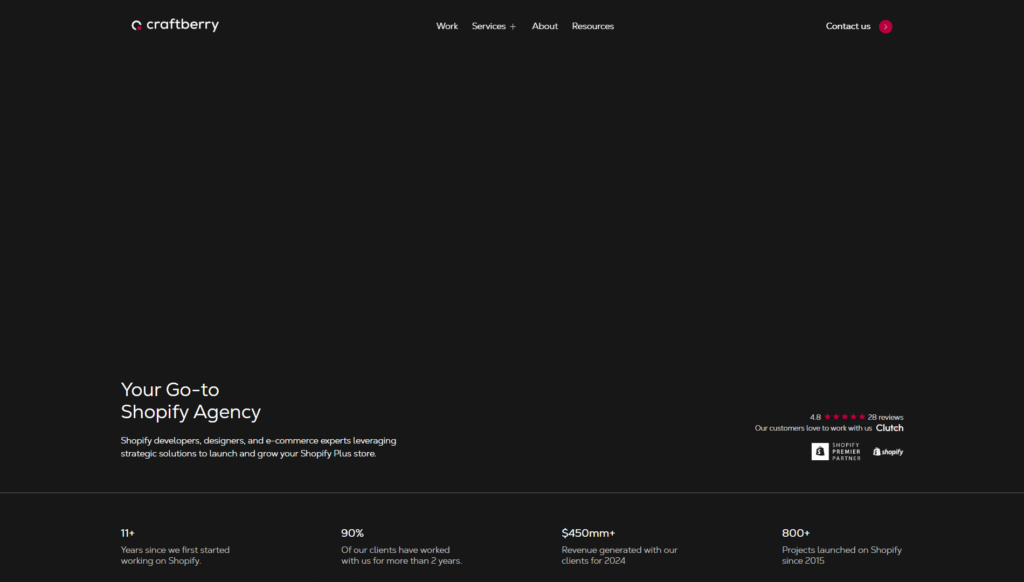
craftberry is a Shopify CRO agency founded in 2015 and a certified Shopify Premier Partner, with named work including Pepper, Enhance Auto, Shelly, and other Shopify projects. Clutch currently lists craftberry at 4.8 from 28 verified reviews.
The team covers the CRO cycle in-house, from research and analytics through hypothesis development, design, implementation, QA, and measurement. This keeps testing and implementation within one delivery process.
That model is particularly relevant to complex Shopify Plus environments, where migrations, integrations, headless storefronts, and multi-market checkouts can affect testing speed, tracking, and revenue.
For brands that want one team to own both CRO strategy and storefront implementation, craftberry offers an end-to-end delivery model.
Case study: For Shelly, craftberry runs an ongoing CRO program based on continuous analysis and A/B testing, with one bundle-framing experiment increasing conversion rate by 11% and revenue per visitor by 8%.
Checked: Shopify Premier Partner status, 30+ in-house specialists, 800+ Shopify projects, named client work, and 28 verified Clutch reviews.
Less suited for: brands looking only for a standalone CRO audit or experimentation consultancy without storefront implementation.
2. Conversion Rate Store
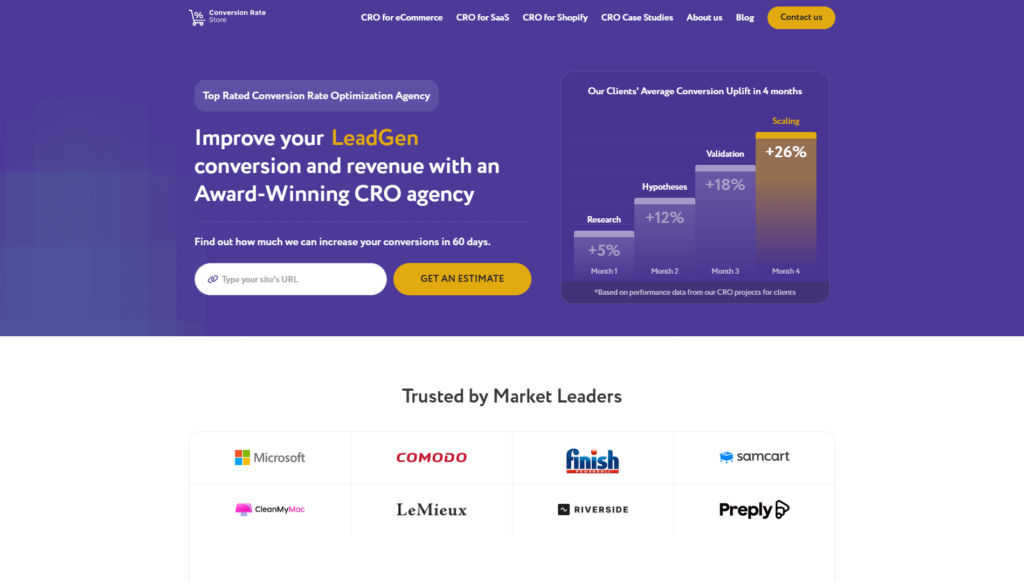
Conversion Rate Store uses a performance-linked model, with fees tied to measured improvements in conversion rate or revenue per user.
That model is better suited to stores with enough traffic and reliable attribution to establish a baseline and measure changes consistently.
Checked: public pricing model, review presence, experimentation positioning, and named client work.
Less suited for: lower-traffic stores where conversion changes are difficult to measure reliably or where attribution is not clean enough for performance-linked pricing.
3. The Scale Room
The Scale Room approaches CRO as part of the build process, using conversion-focused Shopify architecture from the start rather than relying on post-launch fixes.
It is a good fit for brands replatforming to Shopify that want conversion considerations built into the storefront rather than retrofitted later.
Checked: published frameworks and in-house build positioning.
Less suited for: brands looking primarily for a standalone, high-volume A/B testing program rather than conversion-led Shopify implementation.
4. Rocket CRO Lab
Rocket CRO Lab works across ecommerce and SaaS, combining user research with A/B testing and focusing on metrics such as AOV and acquisition efficiency alongside conversion rate.
That broader focus can suit brands looking beyond CVR alone, particularly when increasing order value is an important growth lever.
Checked: research-led process and published case work.
Less suited for: brands that specifically want a Shopify-only CRO specialist with deep platform-specific implementation experience.
5. Convertibles
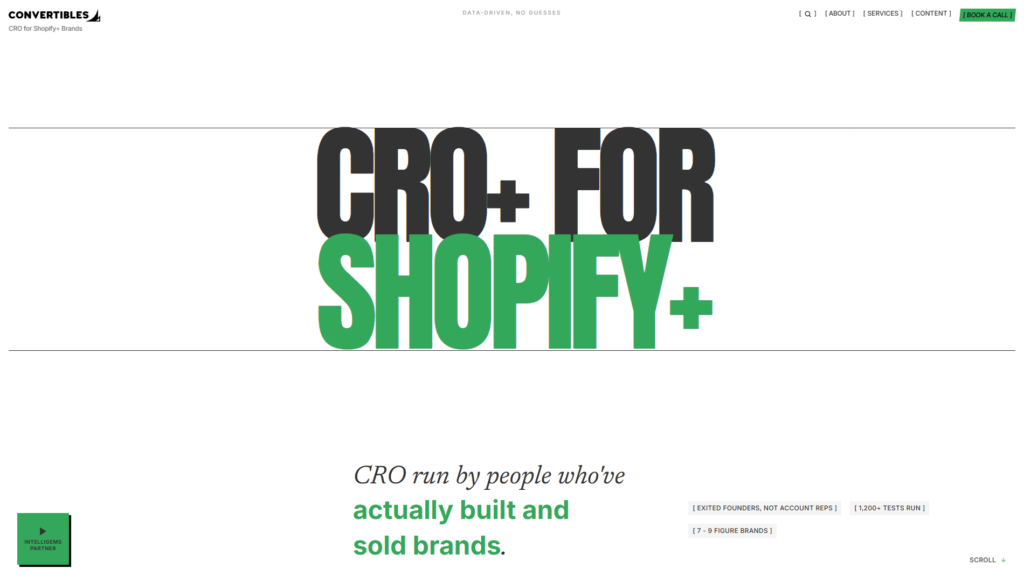
Convertibles is a full-stack CRO team focused on Shopify Plus brands. It publishes its evaluation frameworks and includes implementation within its CRO delivery.
It is a good fit for Shopify Plus brands looking for a focused CRO team with implementation capability.
Checked: published methodology, implementation positioning, and named work available publicly on the agency’s site.
Less suited for: brands that need a large multidisciplinary delivery team or broader Shopify infrastructure work beyond the CRO engagement.
6. Onilab
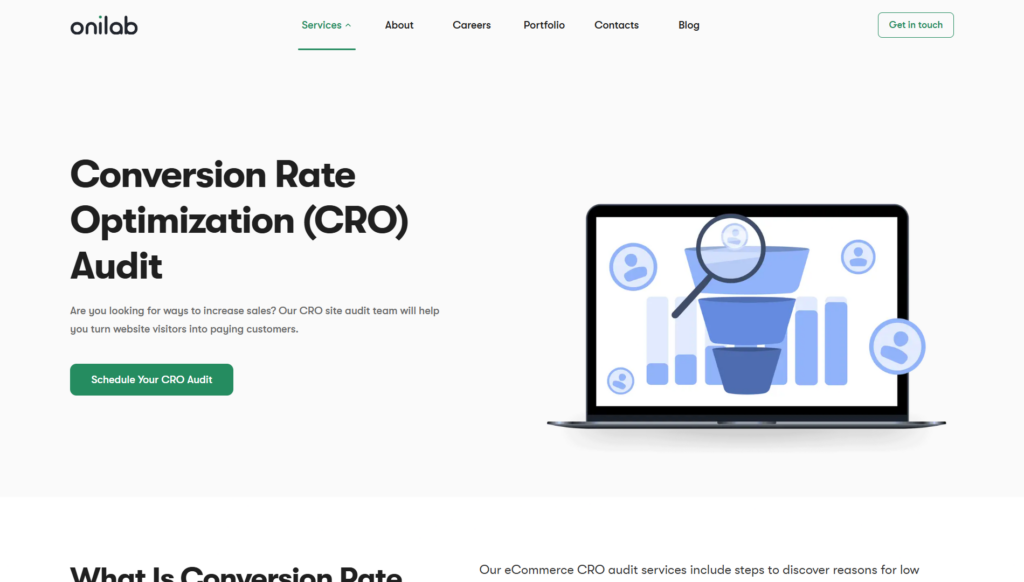
Onilab takes a technical approach to CRO, combining conversion audits with site speed and performance improvements, with a strong focus on mobile.
That approach makes sense when technical performance is part of the conversion problem. Slow or poorly optimised mobile experiences can add friction before a shopper reaches checkout.
Checked: named projects, review presence, platform credentials, and in-house development claims.
Less suited for: brands looking for a dedicated, high-velocity experimentation program where ongoing A/B testing is the primary deliverable.
7. 20North
20North adjusts its CRO approach to traffic volume. High-volume stores can support structured A/B testing, while lower-traffic stores use faster changes tracked against defined KPIs.
That distinction matters. Tests without enough traffic can produce unreliable results and lead to the wrong decisions. Shopify’s CRO reporting guidance also highlights the importance of sample size and testing cadence.
Checked: in-house implementation and traffic-appropriate methodology.
Less suited for: brands that want a large public library of detailed CRO case studies as part of the agency selection process.
8. Endertech
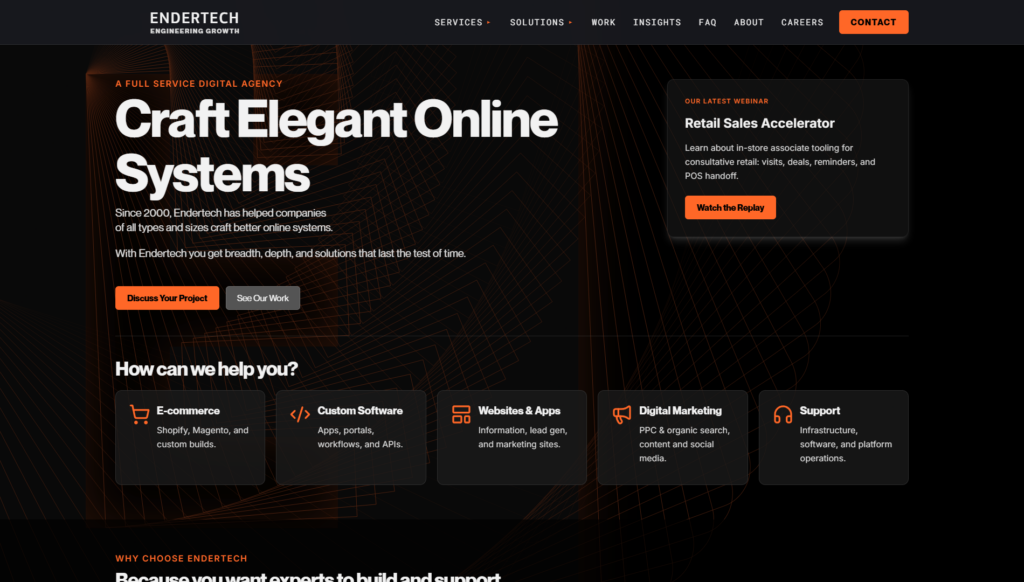
Endertech has worked across ecommerce and custom software since 2000, with conversion optimisation embedded in a broader engineering practice.
Its strength is technical depth, from headless builds to ERP and middleware integrations that can remove technical barriers affecting conversion.
Checked: company history, named projects, review presence, and technical service positioning.
Less suited for: brands looking for a CRO-first specialist where experimentation is the core service rather than one part of a broader engineering engagement.
9. Avatar Website Design
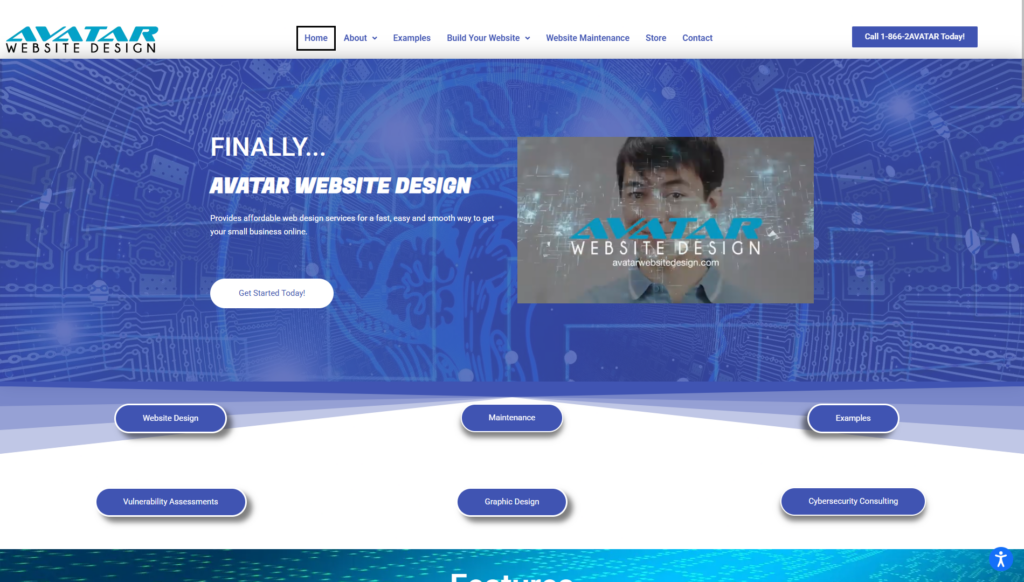
Avatar Website Design targets the small-business end of the market with practical, budget-aware conversion work.
It focuses on practical improvements rather than formal experimentation, making it a sensible option for stores that do not yet have enough traffic for reliable testing.
Checked: service positioning, delivery model, and public pricing positioning.
Less suited for: higher-traffic stores that need a dedicated experimentation infrastructure and statistically rigorous A/B testing program.
10. eSEOspace
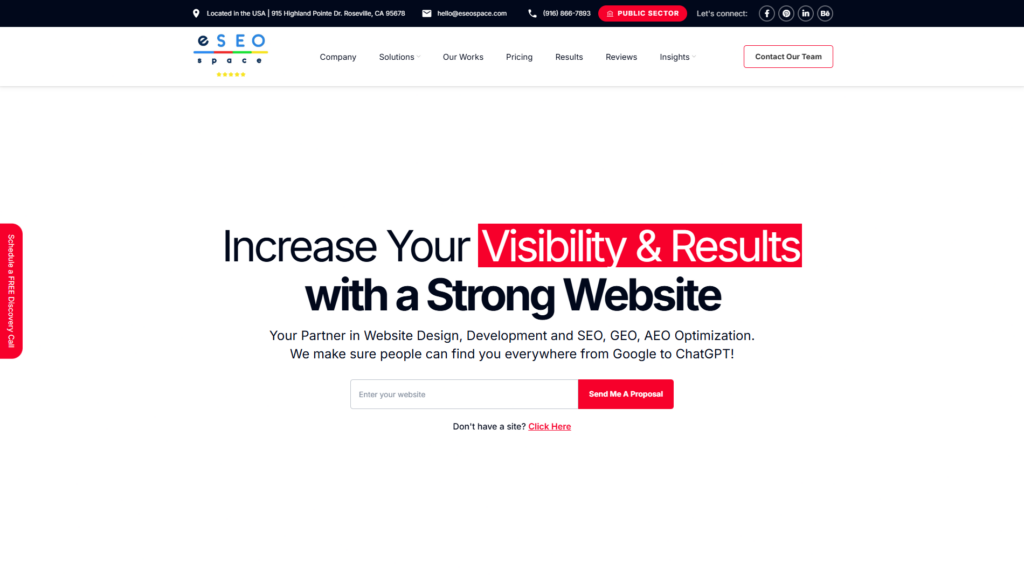
eSEOspace focuses on the overlap between conversion work and AI-driven search visibility, targeting traffic from AI assistants and answer engines alongside traditional organic search.
As this channel grows, visitors arriving through AI can show different intent from traditional search traffic, creating a distinct CRO opportunity.
Checked: published scoring criteria and stated AI search positioning.
Less suited for: brands looking for a standalone CRO program where experimentation, rather than search visibility, is the primary service.
The metrics that matter when choosing a CRO agency
Start with your baseline before comparing agencies. These benchmarks give you a reference point for assessing your store and prioritising CRO opportunities.
| What it measures | The number | What it means for you |
| Average cart abandonment | 70.22% | Roughly seven in ten carts do not convert. This is the opportunity pool CRO can address. |
| Mobile vs desktop abandonment | ~80% vs ~69% | Mobile typically loses more shoppers. Ask for mobile-specific data before prioritising tests. |
| Top reason for abandoning | Extra costs at checkout | Shipping, tax, and fees disclosed late can create avoidable friction. Check these before adding complex CRO tactics. |
| Forced account creation | 19% of abandonments | Requiring an account can add friction. Compare guest and account checkout performance before making a change. |
| Checkout too long or complex | 18% of abandonments | Field count and checkout steps are measurable variables you can test early. |
| Uplift available from checkout design alone | ~35% | Checkout improvements can create meaningful gains before you add personalisation or new tools. |
| Average Shopify conversion rate | ~1.4% | Use this as a reference point, not a target. Any agency using a benchmark should show its source and methodology. |
| Top 10% of Shopify stores | 4.7%+ | A useful performance reference, not a guaranteed outcome for your store. |
| Sensible significance target | 90-95% | Use a clear statistical threshold before calling a test a winner. Lower confidence increases the risk of acting on noise. |
Use these benchmarks to establish where your store stands before discussing an agency’s testing plan.
A strong CRO partner should be able to connect the benchmark to your data, identify the biggest gaps, and explain what they would test first.
FAQ
Which CRO agency is best in 2027?
Based on the proof documented in this ranking, craftberry is the strongest fit for Shopify brands that want CRO strategy and implementation under one team. It combines Shopify partner credentials, documented case studies, verified reviews, in-house development, and a defined CRO process.
How much should CRO cost?
Ongoing CRO programs typically cost around $3,000 to $10,000 per month, depending on testing volume and implementation scope. One-off audits usually cost less, while performance-based pricing can work when attribution is reliable and agreed upon upfront.
Do I have enough traffic for A/B testing?
If your tests cannot reach statistical significance within three to four weeks, your traffic may not support a structured A/B testing program yet.
Start with audits, technical fixes, and qualitative research until you have enough traffic to run reliable tests.
How do I check an agency without a sales call?
Start with five signals: third-party reviews, documented case studies, measurable CRO results, relevant platform experience, and a clear testing process. Review platforms and official partner directories can help you check reviews and platform credentials before you book a call.
Should the agency implement the changes, or just recommend them?
If the CRO opportunity requires storefront changes, having the agency implement them reduces handoffs and shortens the path from test result to revenue impact.
Recommendations alone can lose momentum when another team controls development.