About the client
We build websites and web apps for our clients, and we keep looking after them once they launch. Many of them run on servers we set up and maintain. Many of them run on servers we set up and maintain as part of our website security maintenance work. In October and November 2026, three serious security problems were found in software those sites depend on. Each time, more than 20 of our clients’ servers were affected, and each time we had all of them fixed within a day.
What happened
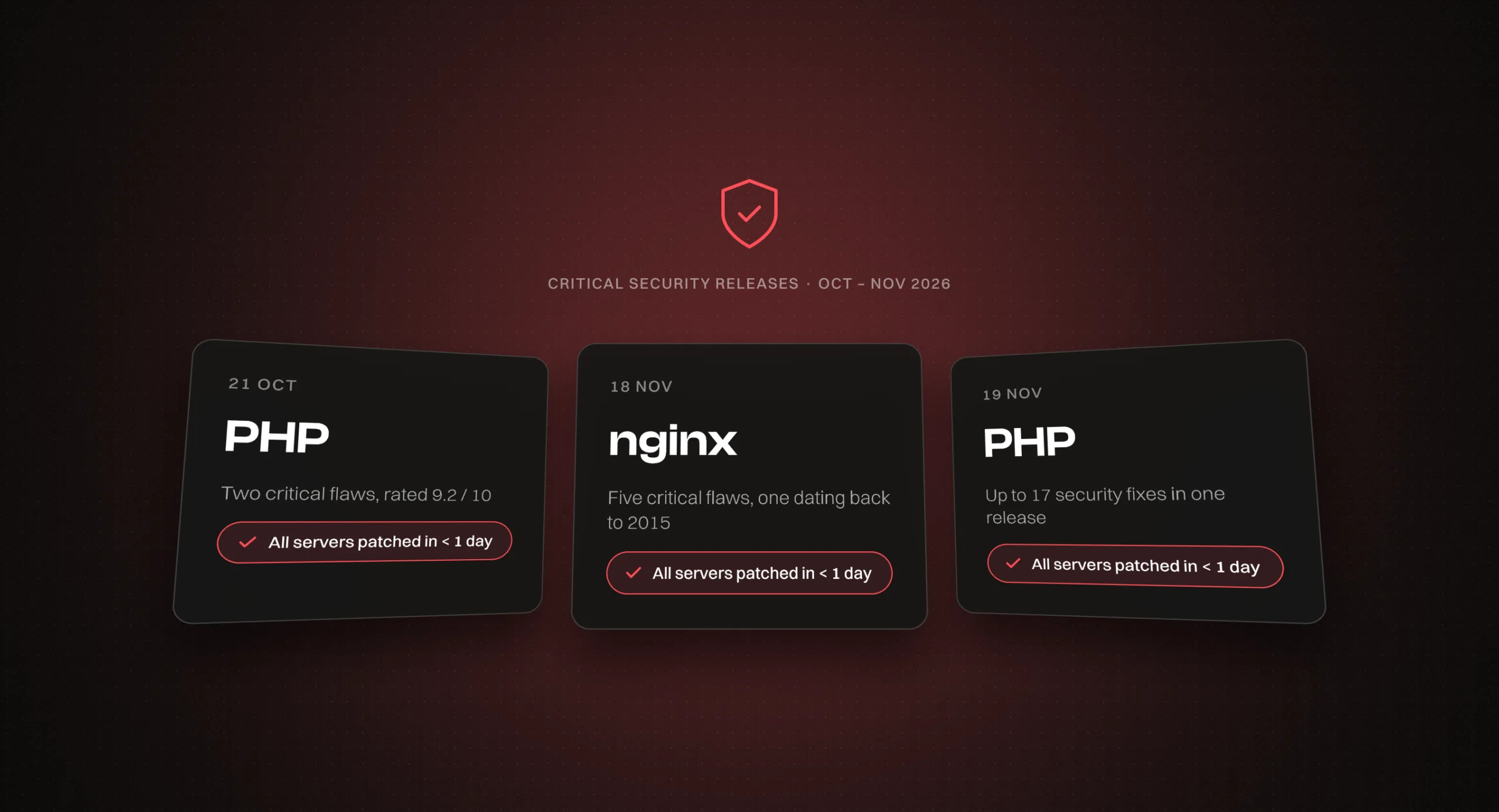
Three critical releases in four weeks.
Many of our clients’ sites run on PHP, the programming language behind WordPress, Laravel and a large part of the web, and on nginx, the web server that delivers pages to visitors. Both are open source and used by millions of websites.
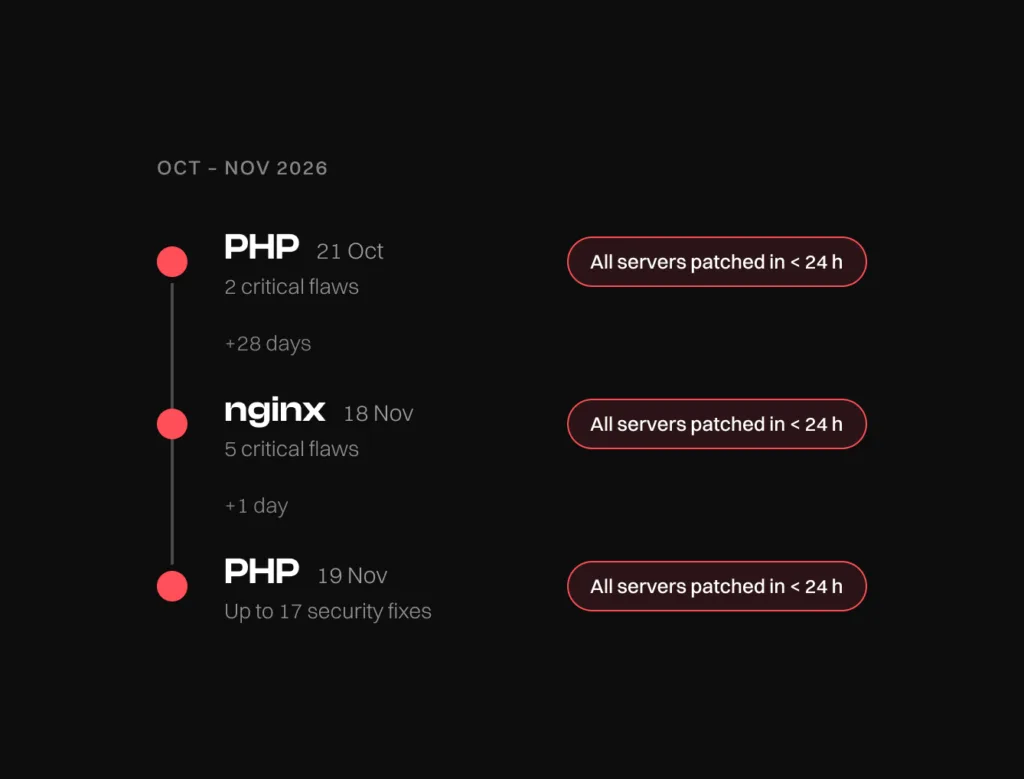
On 21 October, PHP fixed two critical flaws that could let an attacker run their own code on a server. In some setups a single request was enough, and the attacker didn’t need to log in. Both flaws were rated 9.2 out of 10 for severity, and PHP’s advice was to update, since nothing else fully protected a server.
On 18 November, researchers revealed five flaws in nginx, also rated critical. The worst of them had been in nginx since 2015. Together with a separate flaw in Linux that had no fix yet, it could give an attacker full control of the server. A day later, PHP published another critical release with up to 17 security fixes at once.
Security in the AI era
AI finds flaws faster.
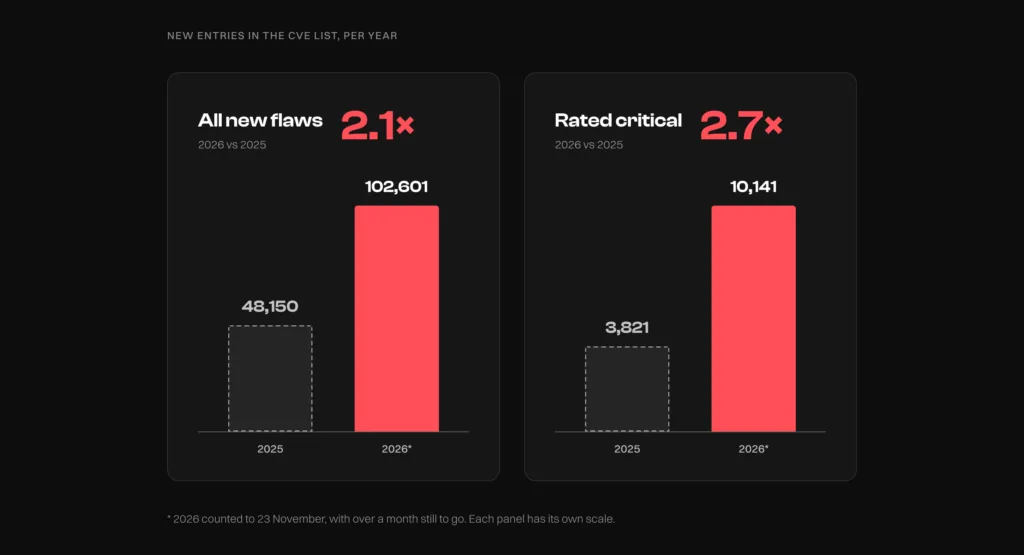
Most publicly known security flaws get an ID in the CVE list, a shared catalogue the whole industry works from. In 2025, 48,150 new flaws were added. By 23 November 2026, this year had already added 102,601, more than double, with over a month still to go. Flaws rated critical went from 3,821 in all of 2025 to 10,141 so far this year.
AI is a big part of the reason. Researchers now use AI tools to search code for mistakes, and they find them in software that experienced people have checked for years. After the nginx disclosure, Cloudflare wrote that “AI-assisted research is finding bugs in heavily reviewed code faster than before, and more disclosures like this one are coming.”
For website owners, that means security updates arrive more often, including for software that has run without trouble for years. AI tools are available to anyone, so once a fix is public, applying it quickly matters.
Website security maintenance
Why website security maintenance matters.
A website keeps depending on other software after launch: the server’s operating system, PHP, the web server, and the framework and packages the site is built with. Each of them gets security updates, and with the numbers above, those updates come more often every year.
You can’t see this kind of problem from the outside. The nginx flaw sat in the code for eleven years, and the sites running it looked and worked normally the whole time. Updating was the only fix.
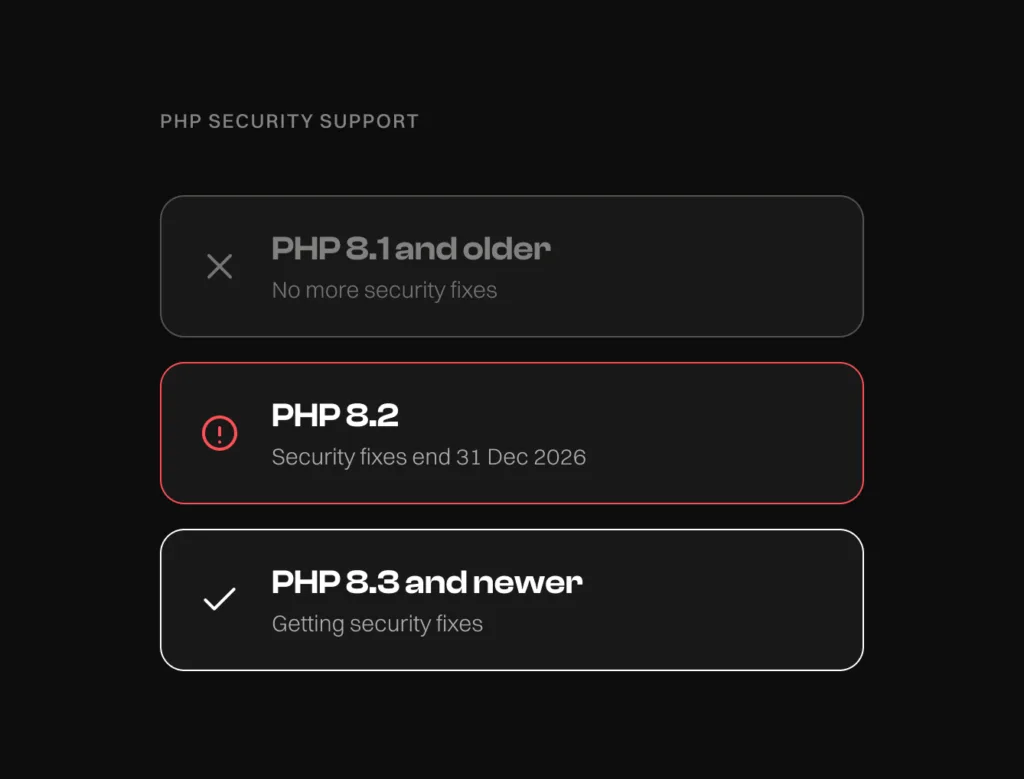
Software also gets old. PHP 8.1 and older no longer get security fixes, and PHP 8.2 stops getting them on 31 December 2026. Older Ubuntu server releases reach the same point. After that, a fix may never arrive for that server, and moving the site to a newer one is the only way to keep it safe. A site nobody looks after ends up there sooner or later, and regular website security maintenance costs far less than recovering it after an attack.
Partner
Choosing a partner for website security maintenance.
You shouldn’t need to follow PHP release notes to keep your website safe. When a critical fix comes out, someone has to notice it, know which servers it affects, have access to them and apply the update without breaking the site. If nobody has that job, the site stays exposed until someone notices.
For our clients, website security maintenance is our job. They didn’t need to do anything during these three releases, and their sites were patched within a day each time.
How we handled it
01
We keep watch
Following security news for the software our clients use is part of our everyday work: the server’s operating system, PHP and the web server, and every framework and library our projects are built with. For each of them we track new vulnerabilities and the recommendations their maintainers publish.
02
We wait for the official fix
We act on the fix and instructions published by the software’s maintainers. Before the second PHP release, PHP announced the date a day in advance, which gave us time to prepare.
03
It goes to the top of the list
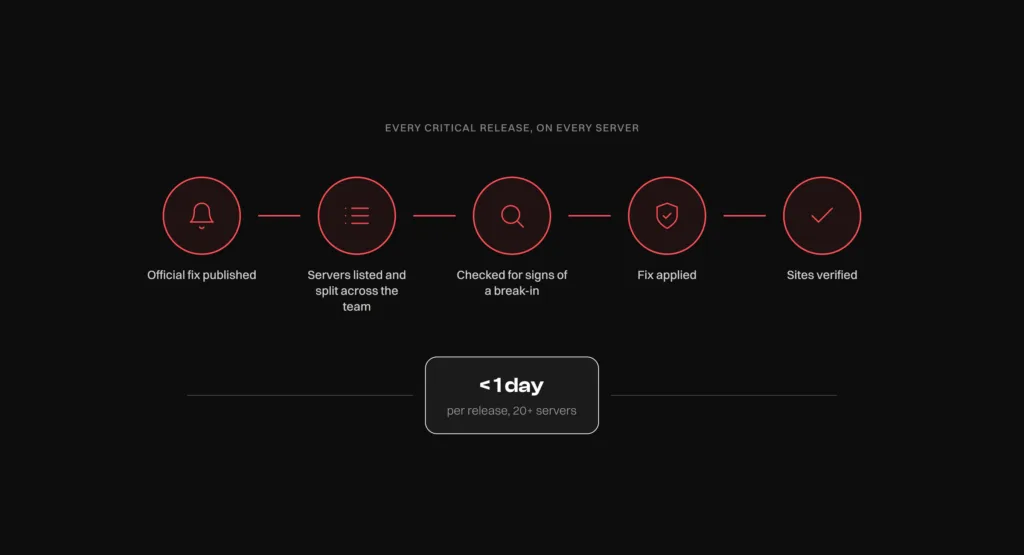
A critical fix moves ahead of all other work. We list every affected server, divide them between the team and track each one until it is done. Before applying the fix, we check each server and app for signs of a break-in. If we find any, we first isolate and clean up the affected parts, then apply the fix. None of the servers had any signs of a break-in during these three releases.
04
We check that everything works
After each update we confirm the fix is in place and that the sites on the server work as before.
05
We plan ahead for older servers
Where a server runs versions that no longer get fixes, we prepare a move to a new server with current software, and update the project’s framework where it needs it.
06
Sites stay online
Most updates cause no downtime at all. When a server needs a restart, the restart is the only downtime.
What helped
Website security maintenance as a daily routine.
Our team works with these servers every day, which let us move fast, and splitting the servers between us meant all of them were handled at the same time. Most of them already ran current versions, so the fixes were available for them straight away.
On the servers we run with Laravel Forge, the platform we use to set up and maintain servers, Forge rolled out the PHP updates. The nginx fix we applied by hand on each server. Access to every server and its credentials is stored in a password manager we host ourselves, and we use SSH wherever possible, so each team member could connect to their servers securely without waiting on anyone.
Results
3
Critical security releases in four weeks
20+
Client servers patched for each release
< 1 day
From the official fix to every server patched
01
Patched within a day
Each of the three releases reached every affected server within a day. We checked every server for signs of a break-in first and found none, and sites stayed online apart from short restarts.
02
Website security maintenance for older servers
For clients running on outdated servers that no longer receive security updates, we offer a complete migration to up-to-date server infrastructure, including any necessary application and technology stack upgrades to ensure full compatibility with the new environment.